
 cyber security
Managed Security Services London: Protect Your Business 24/7
Managed security services, London based are crucial to businesses that require secure systems, secured data, and smooth…
Admin23 Apr 2026
AI Security & Cybersecurity
The cybersecurity world is undergoing a fundamental shift. For years, the conversation was dominated by “cybersecurity” (a prevention-first approach focused on building higher walls and deeper moats). But in 2026, those walls are no longer enough. The reality of modern business (defined by AI-driven attacks, sprawling cloud environments, and complex third-party dependencies) means that breaches are no longer a matter of “if,” but “when
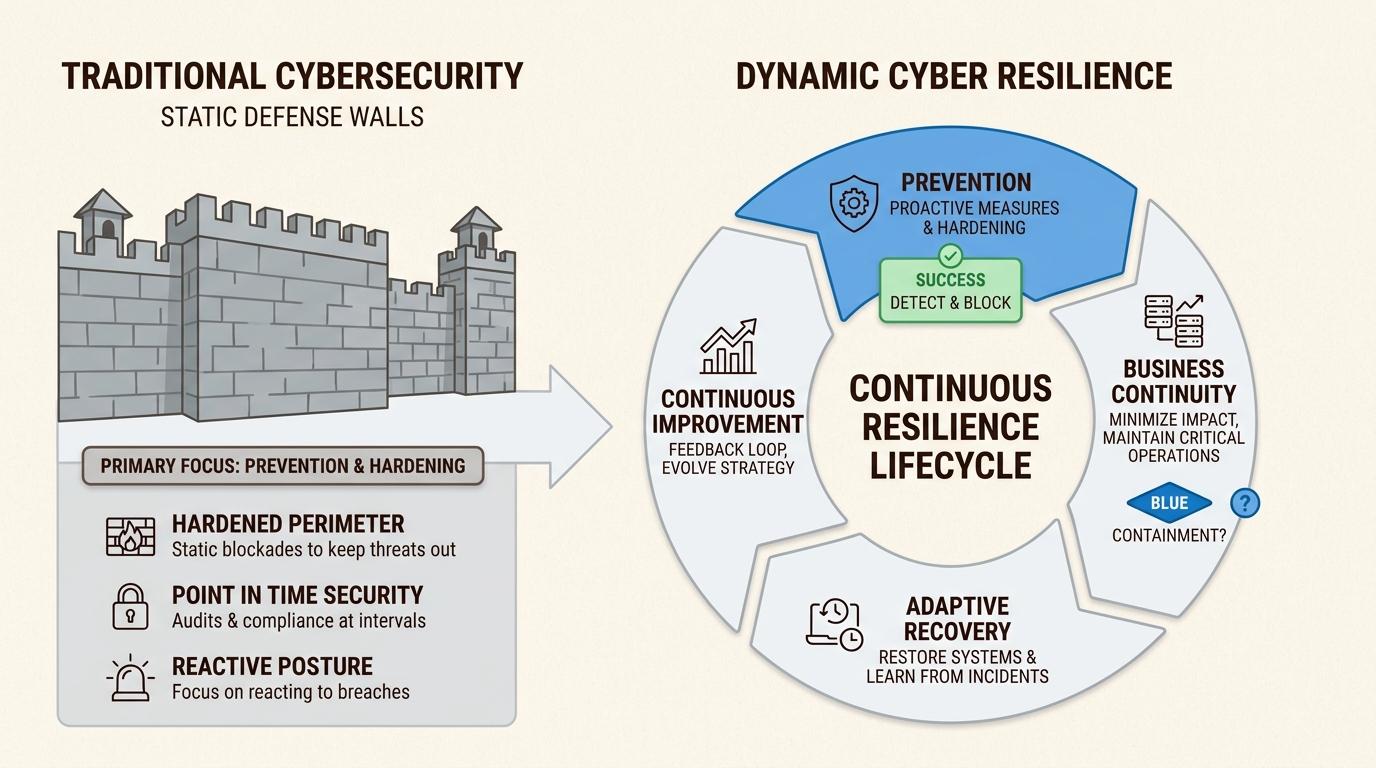
This realization is driving the transition to cyberresilience. While traditional security aims to keep the bad actors out, cyber resilience focuses on your organization’s ability to maintain operations, minimize damage, and adapt even when a breach occurs. It is about business continuity and strategic survival in an environment that never stops changing.
In this guide, we willexplore the core pillars of a modern resilience strategy, how AI is rewriting the rules of the threat landscape, and how you can build a repeatable capability that safeguards your business before any damage happens.
At its heart, cyber resilience refers to an organization’s ability to anticipate, withstand, recover from, and adapt to adverse cyber events. It is a holistic approach that integrates people, processes, and technology to create a comprehensive defense strategy.
But how does it differ from traditionalcybersecurity? Let’s break it down.
While the terms are often used interchangeably, they represent two different mindsets. Cybersecurity is a subset of cyber resilience, primarily focused on defensive measures like firewalls and encryption to prevent unauthorized access. Cyber resilience is the broader framework that assumes those defenses willeventually be bypassed.
The cost of being unprepared has never been higher. Global damages from cybercrime reached $10.5 trillion in 2025 and are projected to climb to $12.2 trillion by 2031. For a Global Fortune 500 company, the average financial loss from a single risk event is now 1.9% of revenue, which translates to roughly $1.6 billion.
At PlutoSec, our mission is to help organizations “safeguard your organization before any damage happens.” We believe businesses must continuously evolve from reactive practices to strong, measurable, and repeatable security capabilities.
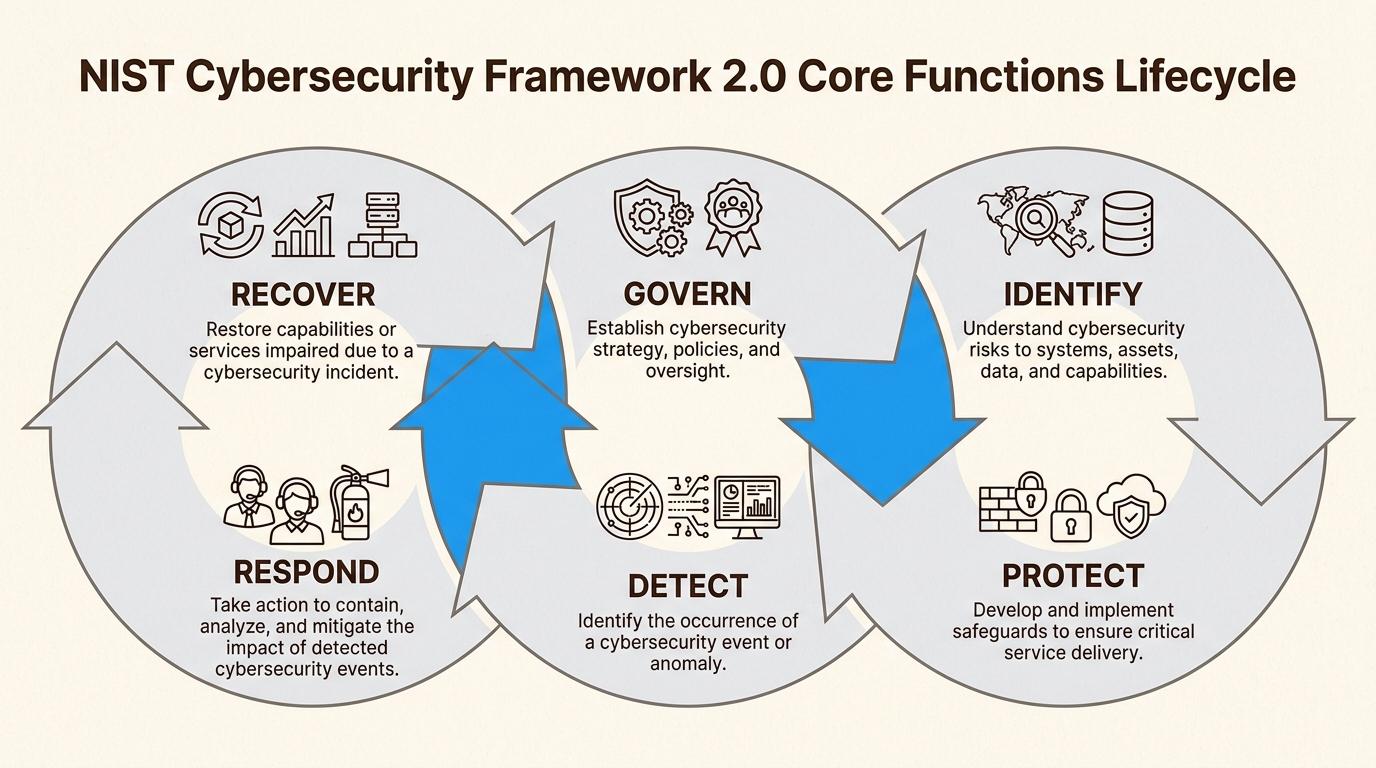
Building a resilient organization takes time and a diligent process. Aproven approach is to align your strategy with the NIST CSF 2.0 Framework. The 2.0 update, celebrating two years in early 2026, expanded its scope to support organizations of all sizes, not just critical infrastructure.
Here are the six functions that form the foundation of resilience:
Governance is the new cross-cutting function in NIST CSF 2.0. It involves establishing your organization’s cybersecurity risk management strategy, expectations, and policy. This ensures that security is a board-level priority rather than just an IT concern.
You cannot protect what you cannot see. This function focuses on developing an organizational understanding to manage risk to systems, people, assets, data, and capabilities. It starts with total visibility into your digital footprint.
Once you know your assets, you must outline safeguards to ensure delivery of critical services. This includes implementing Zero Trust principles, multi-factor authentication (MFA), and robust identity and access management (IAM)
Resilience depends on speed. The detect function defines activities to identify the occurrence of a cybersecurity event in a timely manner. In 2026, this requires real-time monitoring and AI-driven anomaly detection to spot threats that bypass traditional signatures.
When a threat is detected, you need well-defined actions to contain its impact. This includes incident response planning and automated containment workflows to stop lateral movement before the damage spreads.
The final pillar is identifying activities to restore any capabilities or services that were impaired. True resilience means learning from every incident to improve the “protect” and “detect” stages of the next cycle.
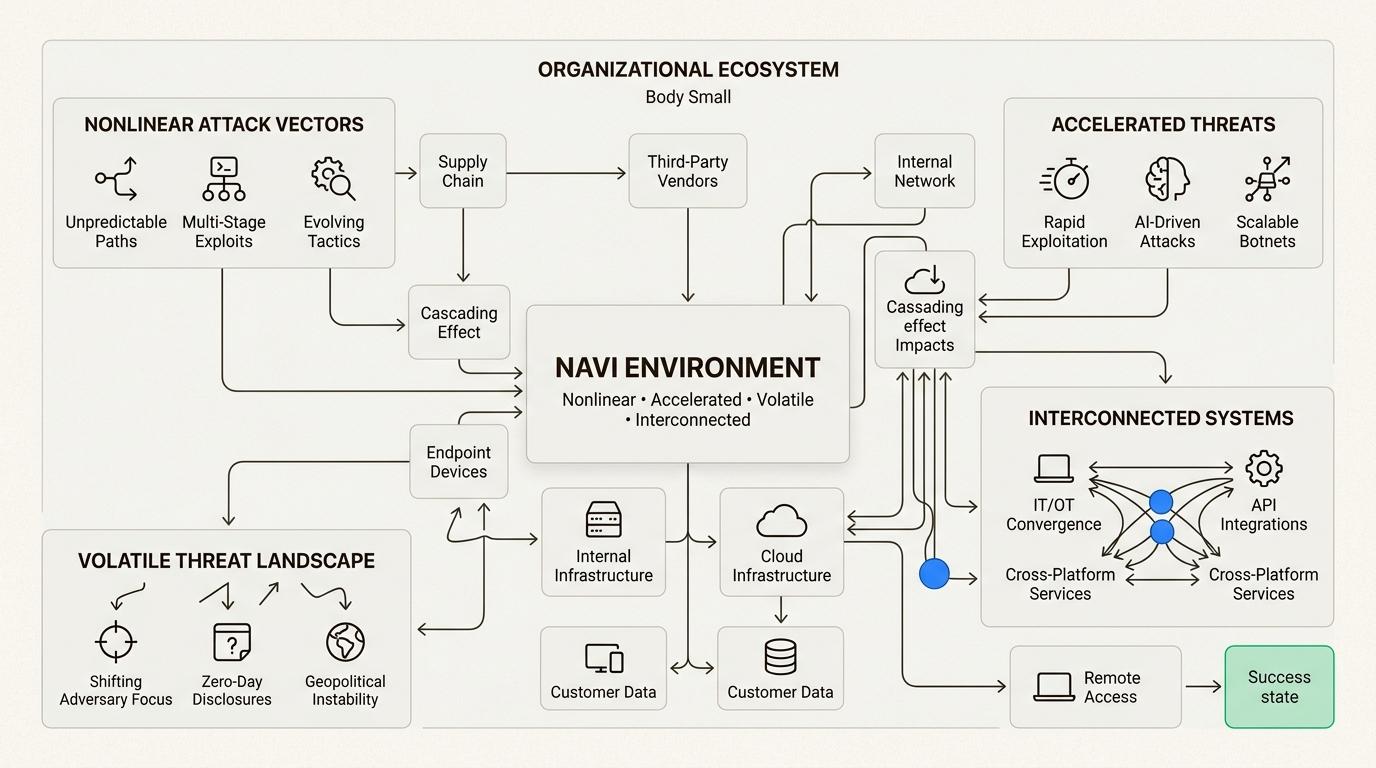
The rise of AI has triggered an iterative arms race between attackers and defenders. We are now living in what research firm EYcalls a “NAVI” environment (Nonlinear, Accelerated, Volatile, and Interconnected).
Attackers are using generative AI to compress the intrusion lifecycle. They use these tools to craft malicious code, generate highly convincing synthetic communications for phishing, and troubleshoot technical barriers during live operations. Malware has even been observed calling out to Large Language Models (LLMs) to generate evasive commands in real time.
This acceleration means that traditional, static controls struggle to keep pace. When attack cycles are measured in minutes rather than days, manualanalysis is no longer a viable defense. This is why AI security testing has become a critical part of a modern resilience strategy.
Resilience now depends on an interconnected ecosystem. A 2026 analysis of security incidents found that third-party involvement was present in 30% of breaches, which is roughly double the figures from just two years ago. This underscores how far cyber risk now extends beyond an organization’s own perimeter.
As critical workloads migrate to the cloud, many organizations are unknowingly introducing new risks. Shadow IT (the use of software or cloud assets without official IT approval) creates “blind spots” that bypass traditional security assessment protocols. Achieving resilience requires a shift from point-in-time audits to continuous, ecosystemwide visibility.
One of the biggest hurdles to resilience isn’t technical, it is cultural. Cyber risk is now a core business and governance issue, but many boards are still playing catch-up.
According to a 2025 Gartner survey, 80% of non-executive directors believe their current board practices are inadequate to oversee AI effectively. Furthermore, 67% rate current practices as inadequate to oversee cyber-risk.
Despite these concerns, there is optimism: 91% of directors view AI as an opportunity for shareholder value rather than just a risk. The challenge is aligning that opportunity with a robust security posture.
Boards are moving quickly to increase their “tech-savvy” and find new ways to provide oversight. In fact, 72% plan to recruit more directors with cyber-risk expertise in the next 12 months.
But you don’t always need to hire a full-time executive to get this level of insight. Many organizations are turning to CISO as a Service to gain flexible access to senior cybersecurity leadership. This allows you to align your security program with business objectives and regulatory standards (like ISO 27001 or SOC 2) without the overhead of a permanent C-suite role.
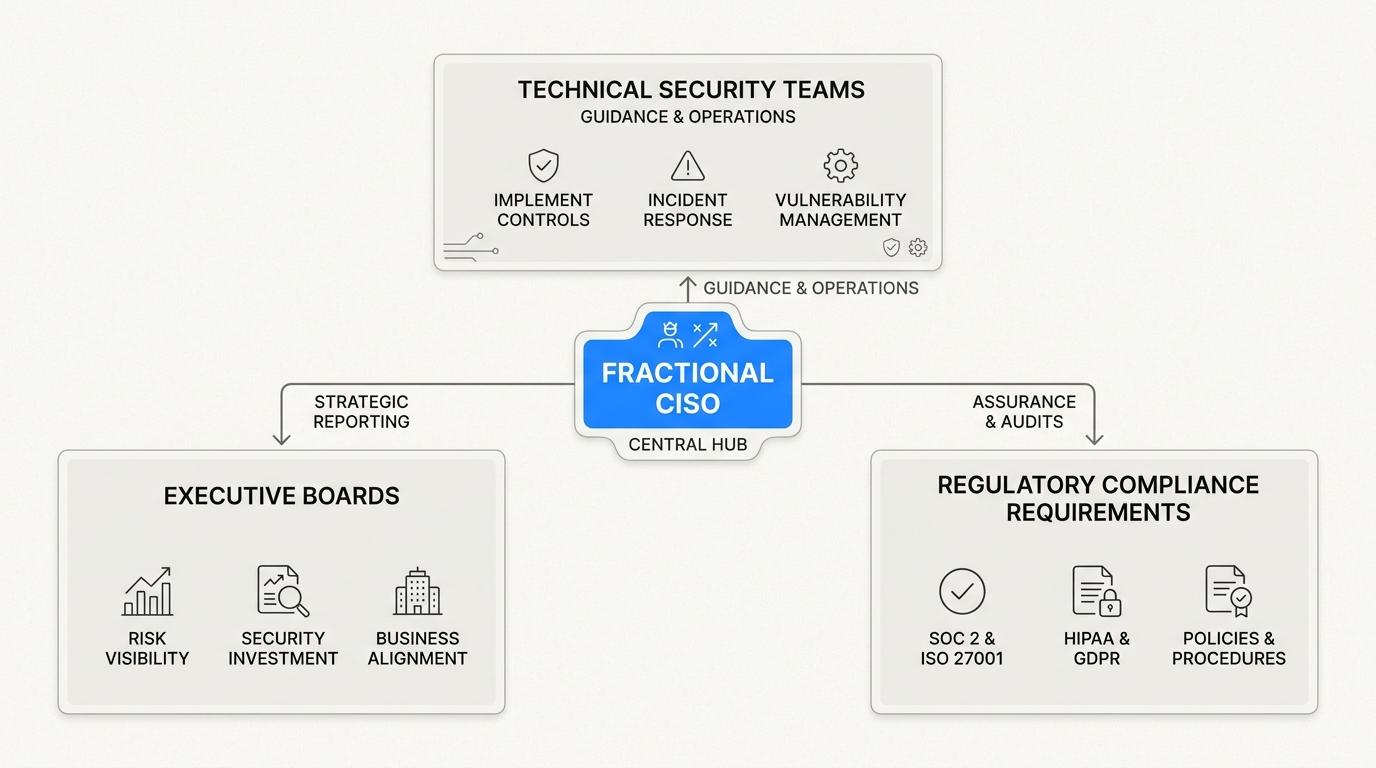
Compliance should not be a “check-the-box” exercise. Leading organizations (those EY calls “Risk Strategists”) use compliance frameworks as a driver for observable evidence. They recognize that regulations are often lagging indicators, so they build resilience capabilities that exceed current standards to ensure they are always audit-ready.
If you are ready to move beyond reactive defense, here is a four-step roadmap to building a measurable resilience capability.
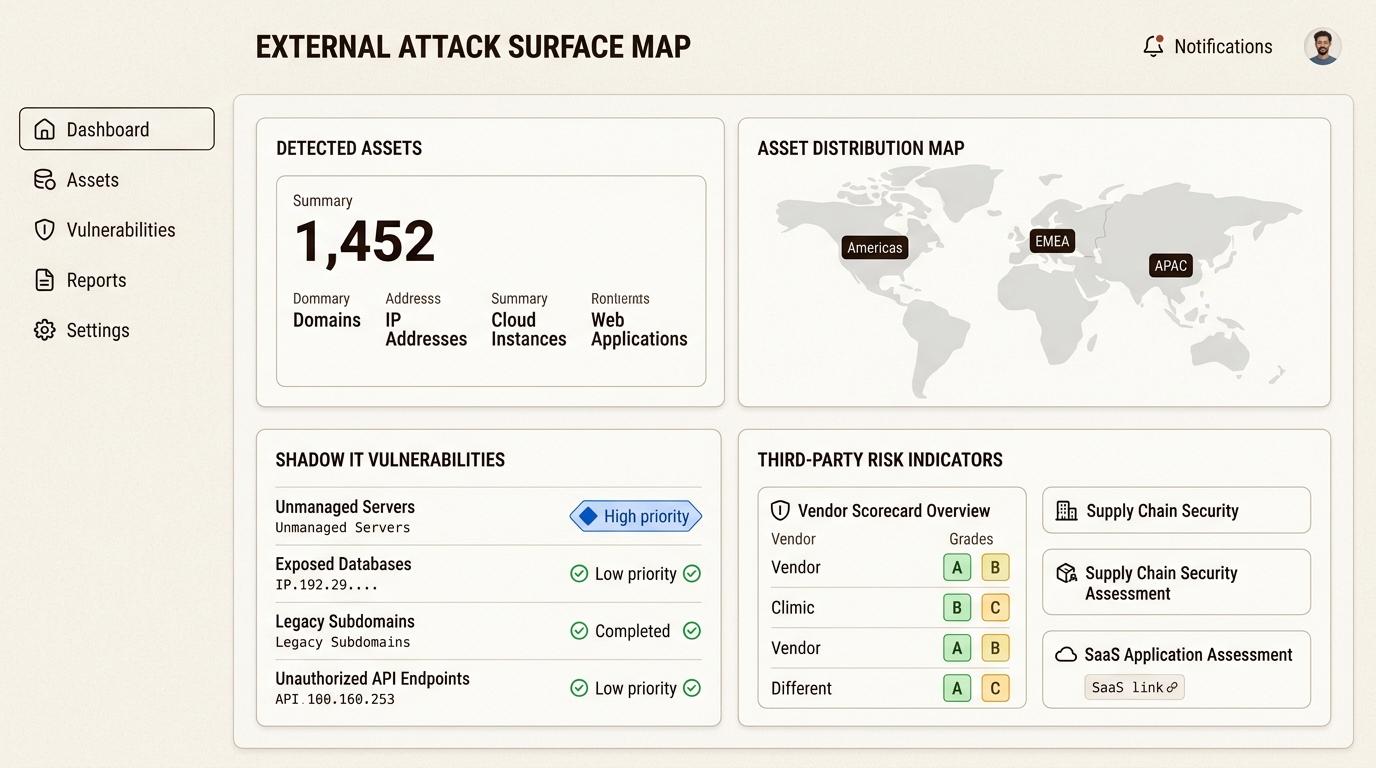
You cannot protect an interconnected ecosystem if you don’t know what’s in it. Using Attack Surface Management (ASM) allows you to discover internet-facing assets, detect shadow IT, and map third-party risk in real time. This “outside-in” visibility often surfaces risks before your internal tools even detect a compromise.
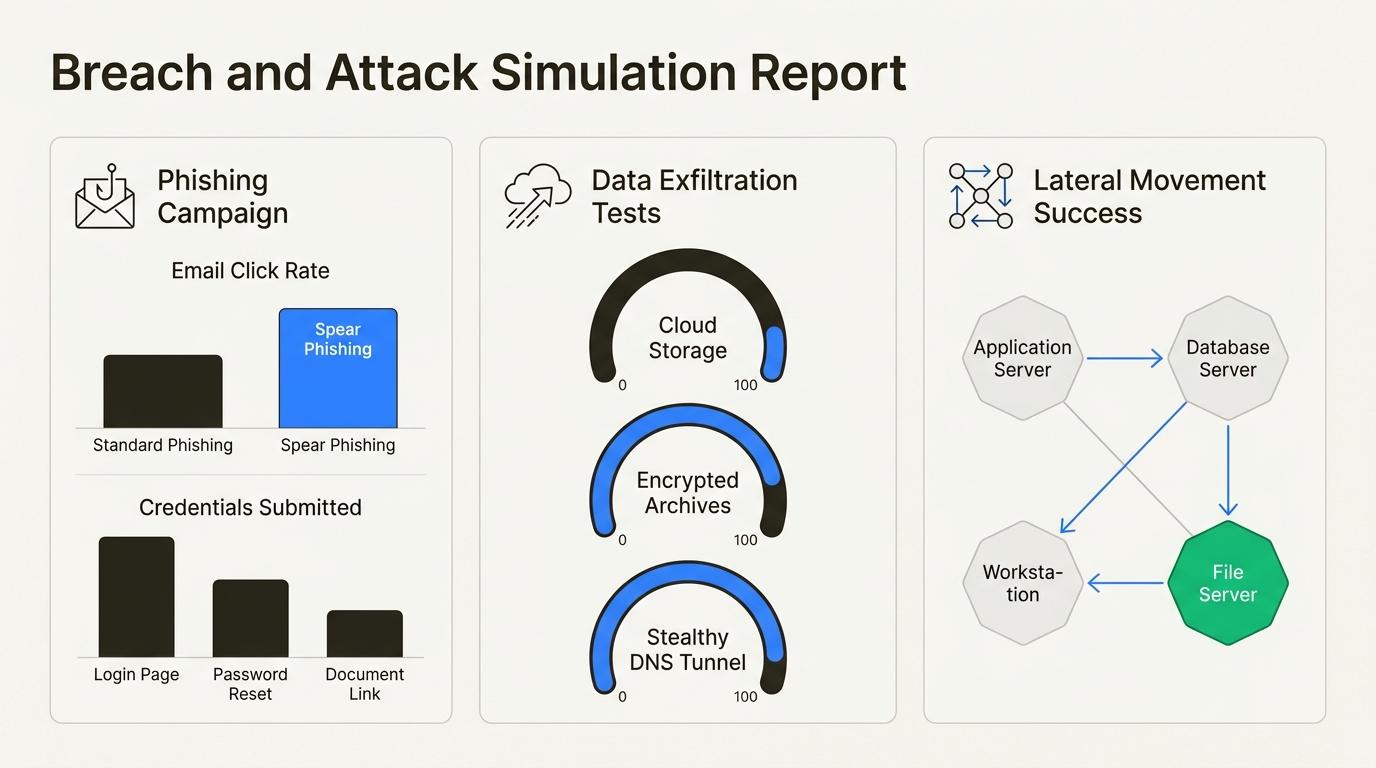
Don’t wait for a realattack to find out if your controls work. Breach and Attack Simulation (BAS) replicates real-world attack scenarios (like phishing or data exfiltration) to measure your true security posture. This provides the “observable evidence” that boards and auditors now demand
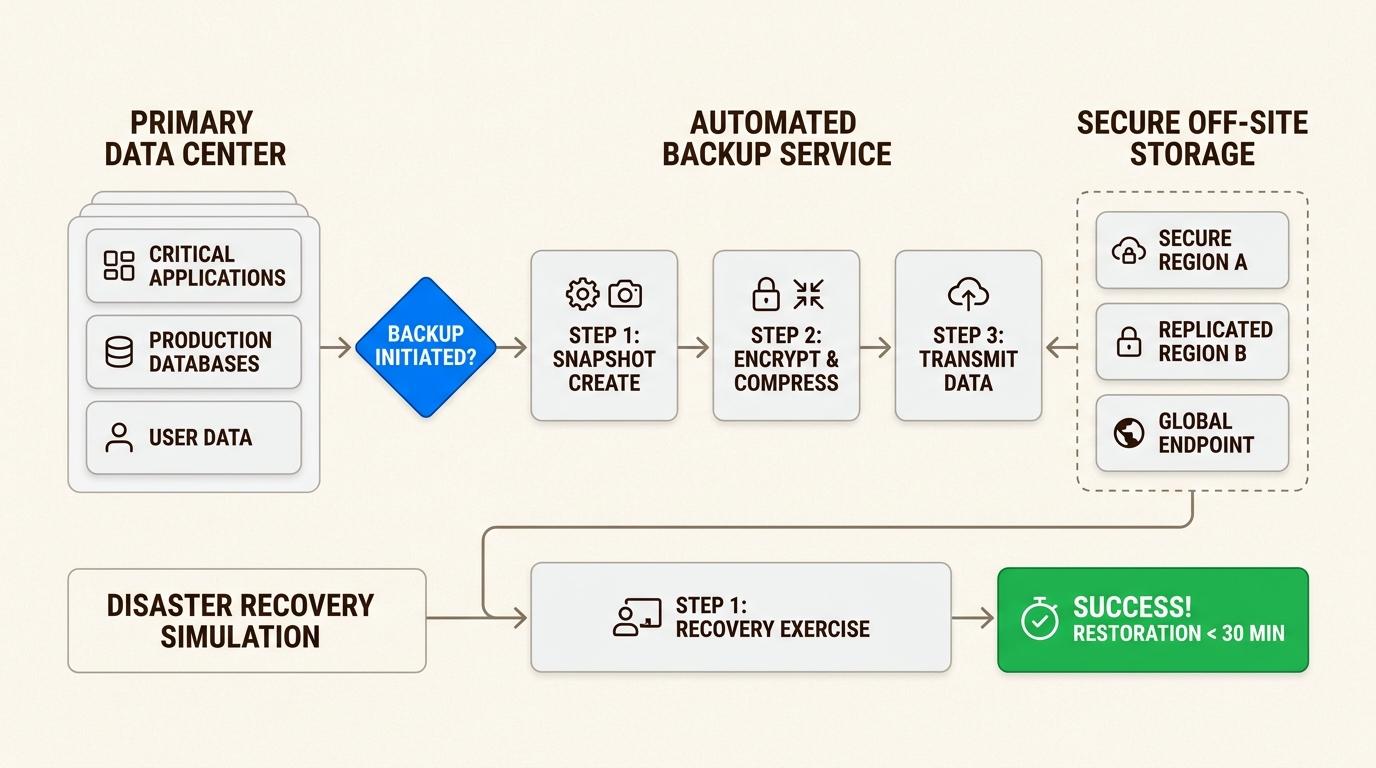
Even with the best defenses, you must plan for recovery. Backup and Disaster Recovery Services are the safety net of resilience. Amature plan should include: - Automated, verified backups of critical files. - Off-site storage in secure locations. - Fast, verified restoration capabilities (targeting restoration in under 30 minutes).
Mimecast’s research shows that human risk remains the #1 challenge, yet only 28% of organizations combine regular training with continuous monitoring. Aresilient culture means moving from simple “awareness” to a “foresight mindset” where every employee understands their role in the security lifecycle.
Achieving resilience in a NAVI world requires more than just better tools (it requires a partner that combines mastery with cutting-edge innovation). At PlutoSec, we provide the strategic leadership and specialized validation you need to foster a secure, decentralized future.
Our approach is built on three core differentiators: - Continuous validation: We use Breach and Attack Simulation to move your organization from guessing to knowing. - Strategic oversight: Through our CISO as a Service model, we provide executive-level guidance that aligns security with your business growth. - Compliance-centricity: We help you navigate complex frameworks like ISO 27001, SOC 2, and GDPR through compliance consulting that ensures you are consistently audit-ready.
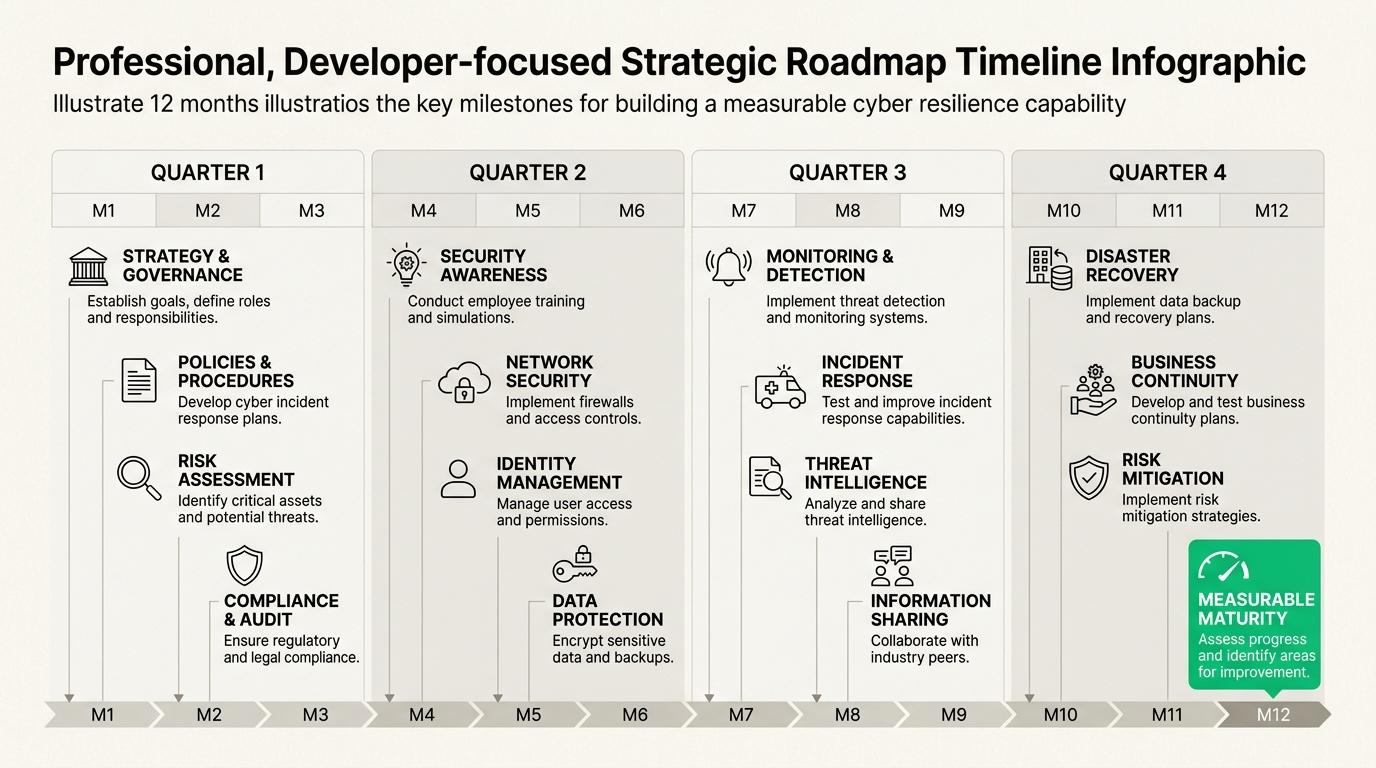
Don’t wait for a breach to reveal your gaps. We can help you build a Cyber Security Strategy & Roadmap that scales with your business and the evolving threat landscape.
Ready to secure your future? Contact PlutoSec today for a strategy consultation or resilience assessment
What is the primary aim ofcyber resilience?
The primary aim is to ensure business continuity. While traditional security focuses on prevention, cyber resilience focuses on your organization’s ability to maintain operations, minimize damage, and adapt during and after a cyber event.
How does the NISTCSF 2.0 help with cyber resilience?
The NIST CSF 2.0 provides a structured, six-function framework (Govern, Identify, Protect, Detect, Respond, Recover) that helps organizations manage and reduce risk. The addition of the ‘Govern’ function specifically helps align security with board-level business strategy.
Why is third-party risk increasing in the current threat landscape?
As organizations become more interconnected through cloud services and supply chains, the attack surface expands. Recent data shows that 30% of breaches now involve thirdparty entities, making ecosystem-wide visibility a criticalcomponent of resilience.
What is the ‘NAVI’ world in the context ofcyber resilience?
NAVI stands for Nonlinear, Accelerated, Volatile, and Interconnected. It describes a modern risk environment where threats emerge suddenly, attack cycles move at machine speed, and a single incident can have cascading downstream impacts across an entire ecosystem.
How can a CISO as a Service model improve cyber resilience?
A CISO as a Service model provides access to senior cybersecurity leadership without the cost of a full-time executive. This leadership is essential for bridging the gap between technical defense and board-level governance, ensuring that security strategy is riskinformed and business-aligned.
What role does AI play in modern cyber resilience?
AI is a double-edged sword. While attackers use it to automate and scale their campaigns, defenders use AI-driven automation and ‘Agentic Security Operations’ to respond to threats at machine speed and close the gap between detection and containment.

Written by
Admin
Your email won't be published.
No comments yet. Be the first to comment!
Keep reading
cyber securityManaged security services, London based are crucial to businesses that require secure systems, secured data, and smooth…
 cyber security
The selection of a cybersecurity company in London, UK, has ceased to be a choice among businesses that are still dependent on…
 Penetration testing
Companies throughout London are struggling with an increase in advanced cyberattacks on web applications, networks, and sensitive…
Get started
Tell us what you need tested. We reply with honest guidance and a fixed-scope quote, usually within one business day.