
 cyber security
AI-Based SOC & Threat Detection
Every day, cyber attacks are on the rise. The companies have been exposed to ransomware.
Admin25 Mar 2026
AI DevSecOps Security
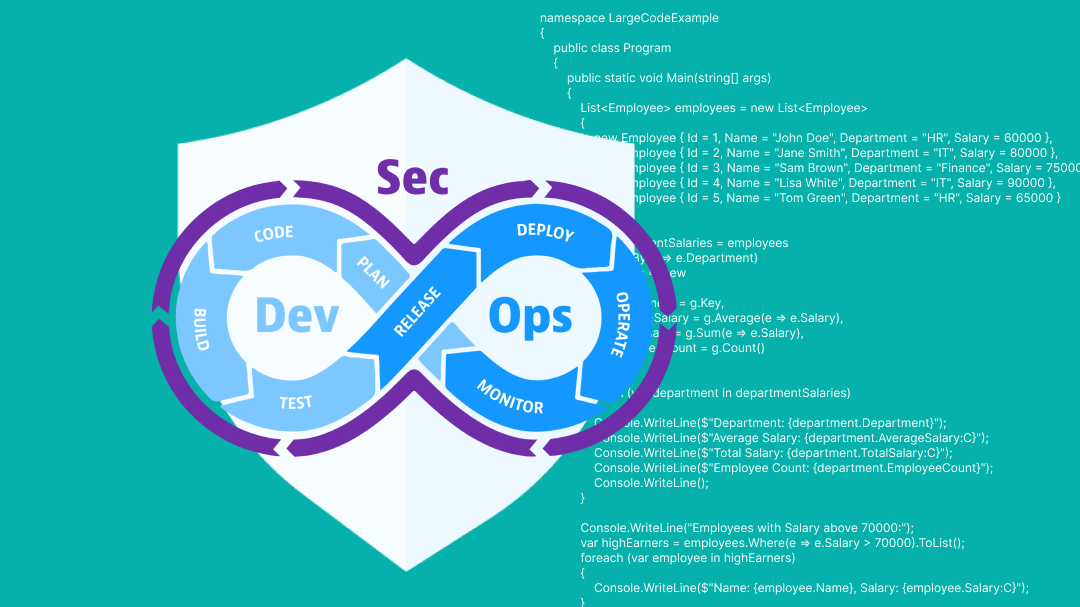
The role of AI is now firmly embedded in the most current applications, including automation systems or even customer-facing products. Security may not keep up with the fast development in the organizations. The gap can be even more severe when AI is used, as risks extend beyond code to data, models, and decision logic.
Speed and efficiency have traditionally been considered as the two important parameters in DevOps practices, yet it has neglected to ensure that critical vulnerabilities are not introduced to these practices without the appropriate security integration. This is the reason why AI DevSecOps security is absolutely needed. It is making sure that security is implemented in each phase of development rather than as an end-to-end implementation.
Those organizations that embrace secure AI implementation and subscribe to an AI secure SDLC methodology are more likely to manage the risks and sustain the pace of development.
Why AI Changes DevSecOps Requirements
AI systems are not like conventional applications. They are based on training data, models, and constant updates. This brings in new risks that could not be addressed by conventional DevOps pipelines.
Hackers may utilize vulnerabilities in model training, may poison inputs, or may inject bad data into pipes. Minor problems in the initial phases may result in significant security breaches at the post-implementation. This is the point where AI DevSecOps security becomes extremely important. It guarantees that code as well as AI components are tested, validated, and secured during the lifecycle.
Lack of this will make organizations prone to implementing systems that seem to be working, but in real circumstances, they are prone to breaking down. Getting Secure AI Deployment Secure AI deployment is concerned with providing AI systems that are resilient to attack since they are launched. It is not only about the security of infrastructure, but it is also about the model, API, and data flows security. A secure deployment practice involves testing model behavior, verifying API interactions, and making sure that data-ins cannot be fiddled with. It also includes keeping a check on the system behavior in production, wherein most attacks that are related to AI occur post deployment. Companies that neglect such steps usually have been affected either by misusing the model or unauthorized representatives. The Role of AI Secure SDLC An AI secure SDLC incorporates security components throughout the process of development, such as planning, deployment, and maintenance. It makes sure that the risks are determined as early as possible and prevented before turning into severe matters. In the design stage, teams provide security requirements with respect to both the application and AI elements. Secure coding is used in conjunction with model validation in development. Examples of testing would be both conventional vulnerability testing and AI-related testing. This high-level practice will minimize the probability of any insidious risks coming in and enhance the reliability of the entire system. Securing CI/CD Pipelines for AI Systems The main development of modern development is mediated by CI/CD pipelines, which, in turn, may serve as the points of entry to the attackers when off guard. These pipelines are even more complicated with AI systems, whose training, data processing, or data deployment processes. AI CI/CD security testing is what provides a warranty that pipelines are not vulnerable to unauthorized modifications, data injection, and code manipulation. These pipelines are commonly attacked by attackers in an attempt to create an opening or distort system behavior. Periodic testing is used to uncover the areas of weakness and also to ensure that the updates to the system do not create new vulnerabilities. Importance of AI Code Security Scanning Even after the introduction of AI, code is an important aspect of the system. Code flaws may put APIs, data, and system logic at risk of being accessed by attackers. There are security scan configurations of AI code that identify vulnerabilities with regard to unsecured dependencies, ineffective authentication, and a lack of proper data management. It can be used in conjunction with AI-specific checks to give a more holistic picture of system security. This will make sure that traditional and AI-related risks are eliminated before deployment. Secure AI Lifecycle Management AI systems are not static. They are developed with time as models are retrained and updated. This dictates that secure AI lifecycle management is crucial in the achievement of long-term security. Every update presents a risk of certain possible risks, particularly when new information is not validated. Attackers can seek to alter training data or capitalize on the behavior change. This can be maintained through continuous testing and monitoring so that updates do not turn to the disadvantage of the system. Such a method maintains the security in line with the evolution of the system. Hardening Systems by using AI Applications Hardening of AI applications aims at minimizing the attack area of deployed systems. It is associated with the process of API security, access restriction, and blocking functions that are not needed. Hardening is also associated with the security of model endpoints, the disability of extreme input validation, and the use of intensive authentication restrictions. These actions complicate the process of attackers using the system. Hardening, when used in conjunction with other security practices, will offer more protection of advanced threats. Typical Attacker Trails in AI DevSecOps Various types of attacks in AI-enabled environments transcend the traditional threats. In most of the attacks, both development pipelines and deployed systems are targeted. Common risks include: Such risks can be detected and addressed by these threats with the best AI DevSecOps security, rather than affecting the production systems. Lack of security in AI development may cause grave consequences. Most of the vulnerabilities that are incorporated when developing the product are not evident until they are used in the manufacturing process. This may lead to monthly data breaches, misuse of the system, and customers' loss of trust. In the controlled industries, it can also result in breach of control and financial punishment. It is possible to minimize these risks through secure AI implementation and adhering to an AI secure SDLC, which will allow organizations to stay stable in their operations. It is important to develop fast, but without security, there is long-term danger. There is a higher degree of protection that AI systems need due to their complexity and dynamism. We pay attention to the organization of security at Pluto Cyber Security through all levels of AI creation. We address the question of AI DevSecOps security, secure AI deployment, and AI secure SDLC, whilst making sure that systems are not only tested with theoretical risks but also with more realistic threats. When your organization is establishing or implementing AI systems, this is the moment in which to bolster your security base. Visit the AI lifecycle and secure your AI by contacting Pluto Cyber Security at +44 7481 912177 or contacting them at [email protected] Security is no reason to drag you. It must cause your systems to be strengthened. What does AI DevSecOps security mean? The AI DevSecOps security also incorporates security methods in each of the phases of AI development and deployment. What is secure AI deployment? Secure AI deployment guarantees the protection of AI systems against threats at the time of their availability. What is AI secure SDLC? AI secure SDLC is a procedure of developing secure AI systems at all development phases. What is an AI CI/CD security test? The AI CI/CD security testing guards pipelines against hacked changes and vulnerabilities. What do you mean by AI application hardening? The hardening of AI applications lessens the vulnerability of the system by securing the APIs, access control, and model endpoints.
Weak AI Security Practices: Business Impact
Move Beyond Speed, Build Security Into Every Stage
FAQs

Written by
Admin
Your email won't be published.
No comments yet. Be the first to comment!
Keep reading
cyber securityEvery day, cyber attacks are on the rise. The companies have been exposed to ransomware.
 Cloud Security
Cloud applications have now become the drivers of most of the modern applications.
 Artificial Intelligence Security
The modern digital systems are quickly changing as a result of artificial intelligence.
Get started
Tell us what you need tested. We reply with honest guidance and a fixed-scope quote, usually within one business day.